
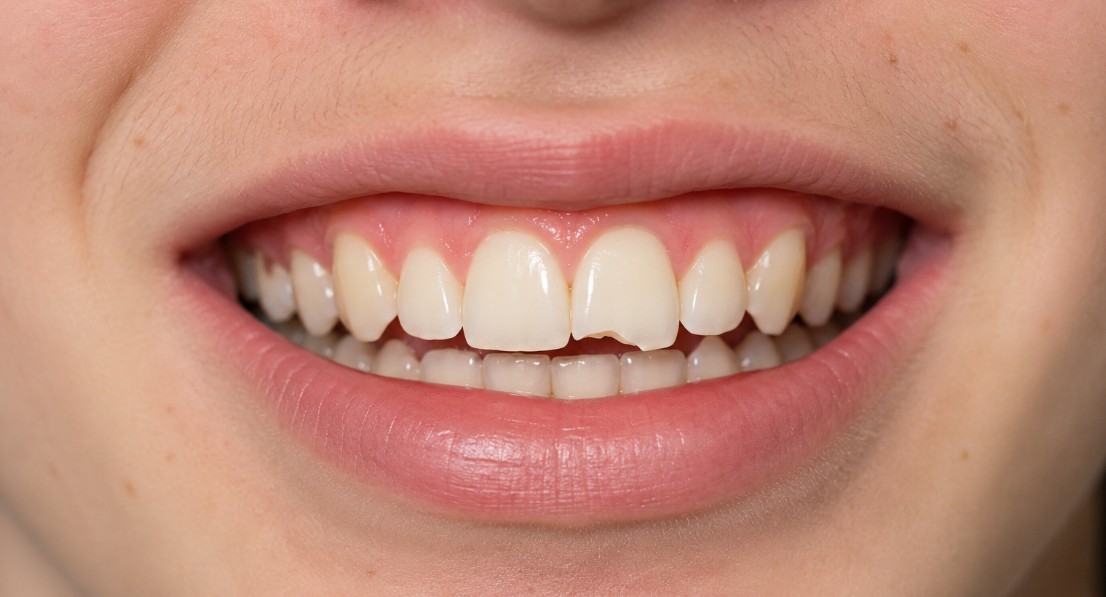
Biting into something hard, a fall, a bump during sports, a chipped tooth can happen in an instant, and it’s normal to feel a little panicked when it does. The good news is that most chipped teeth are very treatable, especially when you take the right steps right away. Here’s exactly what to do.
Step 1: Stay Calm and Assess the Damage
Not all chips are the same. Some are small and only affect the enamel, causing no pain at all. Others go deeper into the tooth and can be sensitive or even bleed. Rinse your mouth gently with warm water so you can get a clearer look at the chip and check for any sharp edges.
Step 2: Save Any Broken Pieces
If a piece of the tooth broke off, save it if you can. Rinse it gently and store it in a small container with milk or your saliva. In some cases, your dentist may be able to bond the original piece back onto the tooth.
Step 3: Rinse With Warm Salt Water
Swishing with warm salt water helps clean the area, reduce the risk of infection, and can ease minor discomfort while you wait to be seen.
Step 4: Manage Pain and Protect the Area
- Cover sharp edges. If the chip has left a sharp or jagged edge, dental wax (available at most pharmacies) can protect your tongue and the inside of your cheek from getting cut until you’re seen.
- Use an over-the-counter pain reliever if needed, following the package directions.
- Avoid chewing on that side of your mouth, and stick to soft foods until the tooth is repaired.
- Avoid extreme temperatures. Chipped teeth are often more sensitive to hot or cold, so lukewarm foods and drinks are your best bet in the meantime.
Step 5: Call Your Dentist As Soon As Possible
Even a small, painless chip should be checked out. What looks minor on the surface can sometimes extend into the inner layers of the tooth, and catching it early prevents bigger problems — and bigger repairs, down the road.
Call right away if:
- You’re in significant pain
- The tooth is sensitive to hot, cold, or pressure
- You notice a large piece missing
- There’s any bleeding that doesn’t stop with gentle pressure
- The chip happened alongside a facial or jaw injury
How Dentists Typically Fix a Chipped Tooth
Depending on the size and location of the chip, treatment options may include:
- Dental bonding: a tooth-colored resin applied and shaped to restore the tooth, often completed in a single visit
- Reattaching the original piece: possible in some cases if the broken fragment was saved
- A dental crown: used for larger chips or when a significant portion of the tooth is affected
- A veneer: sometimes recommended for chips on front teeth for a more cosmetic result
Your dentist will recommend the best option based on the size, location, and depth of the chip.
The Bottom Line
A chipped tooth is common, and in most cases, very fixable, especially when it’s treated quickly. Rinse, protect the area, save any broken pieces, and get in to see your dentist as soon as you can.
If you’ve chipped a tooth, don’t wait it out. Contact Southridge Dental Care and we’ll get you in to take a look and get you back to feeling like yourself.